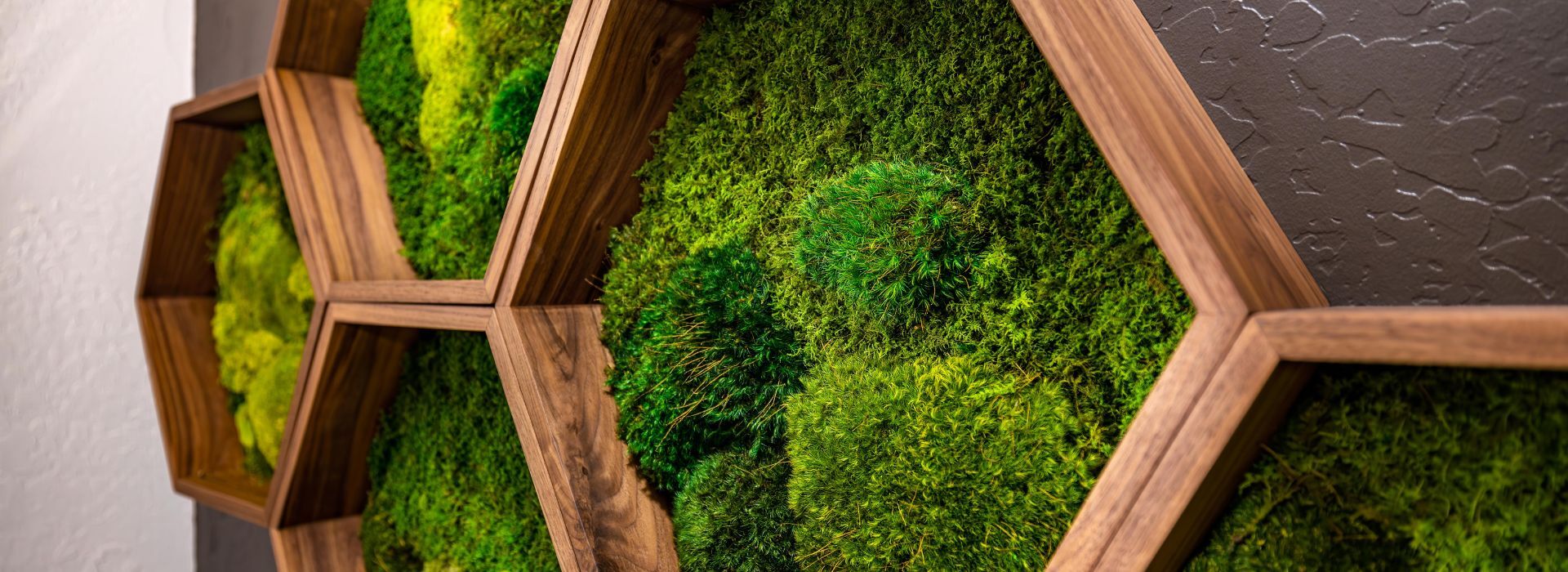
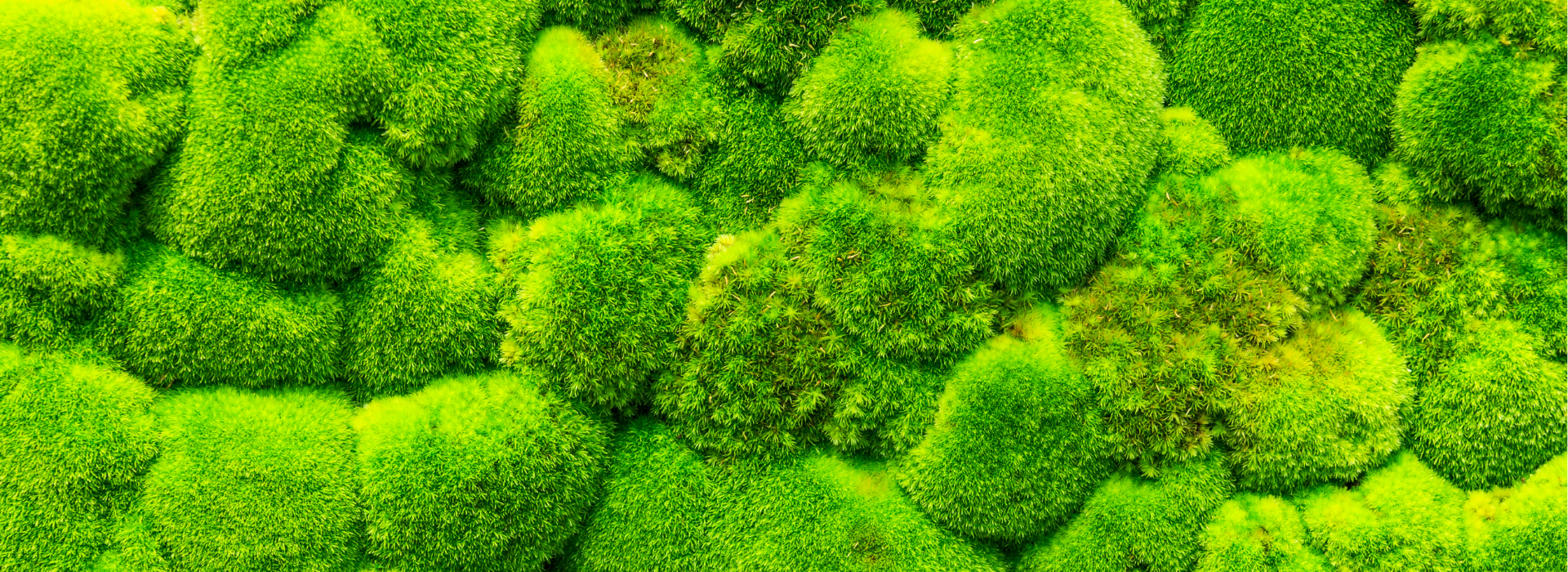
Moss Wall Maintenance at a Glance
- Do moss walls need water?
No. Never water preserved moss. - Do moss walls need light?
No. Preserved moss does not require natural or artificial light. - Do moss walls smell?
Slightly at first. A faint earthy scent is normal and fades within a few weeks. - Do moss walls get moldy?
No—unless exposed to water or extreme humidity. - Do moss walls attract insects?
No. Preserved moss contains no soil, moisture, or nutrients. - Do moss walls collect dust?
Yes, minimally. Light dusting once or twice per year is sufficient. - How long do moss walls last?
10+ years in proper indoor conditions. - Are moss walls truly low maintenance?
Yes, among the lowest maintenance biophilic systems available.
Moss walls have become one of the most trusted tools in modern biophilic design. From corporate offices and hospitality spaces to healthcare environments, private residences, and large-scale renovations, preserved moss walls deliver a rare combination of visual impact, sensory richness, and long-term reliability, all without irrigation systems, lighting requirements, or ongoing plant care.
Yet despite their reputation as “maintenance-free,” questions inevitably arise once a moss wall is installed:
- Should it be watered or sprayed?
- Does it need professional servicing?
- Can it grow mold?
- Will it attract insects?
- Why does it sometimes feel dry or crunchy?
- How long will it really last?
This guide serves as the definitive pillar resource for moss wall art maintenance, answering those questions in detail while setting realistic expectations for long-term performance. Whether you are specifying moss walls for a commercial project, maintaining one as a facilities manager, or investing in biophilic design for your home, this article will give you clarity and confidence.
Throughout the guide, we’ll also reference deeper supporting topics, including lifespan, watering myths, and cleaning practices, so this article functions as the central hub for all future moss wall education.

What Is Preserved Moss (and Why Maintenance Is Different)?
Understanding what preserved moss is is essential to understanding the maintenance of moss walls.
Preserved moss is real, natural moss that has been sustainably harvested and treated through a preservation process. During this process, the moss’s natural moisture is replaced with a plant-safe glycerin-based solution. Chlorophyll is removed, stopping photosynthesis and growth. The moss retains its softness, color, and three-dimensional texture despite no longer being alive.
Once preserved, moss is no longer living. This single fact is the reason preserved moss wall art maintenance is radically different from traditional plant care, or from living moss wall maintenance, which requires irrigation, lighting, pruning, and professional servicing.
Preserved moss walls do not grow, drink, photosynthesize, or regenerate. Instead, they behave more like a natural interior finish, similar to wood, cork, or leather, responding to environmental conditions rather than care routines.
What Professional Services Specialize in Moss Wall Maintenance?
This is one of the most common questions asked by building managers and designers after installation.
The short answer:
Most preserved moss walls do not require professional maintenance services.
Because preserved moss walls are inherently low-maintenance moss walls, there is no need for monthly plant care visits, irrigation inspections, fertilization, pest treatments, or lighting adjustments.
In the vast majority of cases, simple in-house care is sufficient. A light dusting once or twice per year is all that is required to keep a moss wall looking vibrant for many years.
Professional services may only be needed if:
- The wall is physically damaged
- Water was accidentally introduced
- Sections need refreshing after many years
This is one of the major advantages of indoor moss wall maintenance compared to living wall systems, which require long-term service contracts.
Do Moss Walls Need to Be Sprayed or Watered?
No. And it cannot be overstated enough.
Preserved moss walls should never be watered or sprayed.
Watering preserved moss can break down the preservation solution, cause dye bleeding or discoloration, lead to mold or mildew in surrounding materials, and permanently damage texture and structure.
If you remember only one rule of moss wall art maintenance, let it be this:
Water is the fastest way to ruin a preserved moss wall.
How Often Should I Water My Moss Wall?
You shouldn’t.
Preserved moss is not living. It does not require watering to stay green, lush, or soft. Any instruction, online or otherwise, suggesting misting or spraying is incorrect for preserved systems.
If a moss wall appears dry, crunchy, or firm, this is not a sign that it needs water. It is responding to humidity levels in the space, not thirst.
Environmental Conditions That Matter (More Than Maintenance)
Moss walls succeed or fail based on environmental stability, not ongoing care.
Ideal Humidity for Moss Walls
Preserved moss performs best in environments with 40–60% relative humidity.
- Below 40%: Moss may feel firmer or crunchy
- Above 60–70%: Moss may feel overly soft and, in extreme cases, vulnerable to surface issues
A helpful rule of thumb:
If the space feels comfortable for people, it’s comfortable for moss.
This makes preserved moss walls exceptionally compatible with offices, healthcare environments, and residential interiors.
Airflow and HVAC Considerations
Good airflow prevents moisture buildup and supports long-term color stability.
Avoid installing moss walls:
- Directly above humidifiers
- Adjacent to unvented showers or steam rooms
- In sealed niches without air circulation
Do Moss Walls Need Light?
No, preserved moss is no longer living and does not need light to grow. It does not need sunlight or grow lights to maintain its appearance.
This is why moss walls are frequently specified for low-light spaces without windows or natural light. Corridors, hallways, healthcare environments, lobbies, and feature walls are all great spaces where moss walls can thrive for many years.
Can Light Damage Moss Walls?
While moss does not need light, prolonged direct sunlight can cause gradual color fading over many years, similar to artwork or textiles.
Because preserved moss is a natural material, it is treated with non-toxic dyes during the preservation process to maintain its rich, vibrant color. These dyes are intentionally chosen for their safety and environmental friendliness, but they are also more susceptible to UV exposure than synthetic materials.
Best Practices for Moss Wall Placement Near Windows
If a moss wall is installed near a window:
- Avoid locations with direct, all-day sun exposure
- Consider specifying UV-treated or UV-filtering window glass
- Use window films or treatments that reduce UV transmission
UV-treated windows significantly extend the color longevity of moss walls and are strongly recommended when moss is placed in bright, sunlit interiors.
Indirect daylight, ambient lighting, and accent lighting are all completely safe and will not harm the moss. In fact, thoughtful lighting can enhance the texture and dimensionality of a moss wall without impacting its lifespan.
Do Moss Walls Smell?
Yes, but only at first.
Preserved moss is treated with a glycerin and dye solution that can create a faint earthy or slightly sweet scent immediately after installation.
This scent:
- Is non-toxic
- Is completely normal
- Is not mold or decay
In most installations, the smell fades within one to three weeks, depending on airflow and wall size.
Once acclimated, occupants rarely notice it at all.
Do Moss Walls Collect Dust?
Yes, but minimally.
Moss walls are vertical surfaces, so they collect far less dust than horizontal furniture. Any dust that does accumulate can be removed with light, dry methods as outlined below.
Do Moss Walls Need to Be Cleaned?
Yes, but very gently and very infrequently.
Like any interior surface, moss walls collect a small amount of dust over time, particularly in mechanically ventilated spaces.
How Often Should Moss Walls Be Cleaned?
In typical environments, moss walls should be cleaned once or twice per year. In high-dust environments, a cleaning schedule should be worked out using visual checks of the moss wall.
Approved Cleaning Methods
- Compressed air (low pressure)
Very gentle feather dusting - Soft airflow from a handheld blower
What to Avoid
- Water or spray cleaners ❌
- Wet cloths ❌
- Vacuum attachments ❌
- Scrubbing ❌
Moisture is the biggest risk factor when cleaning preserved moss. As long as cleaning remains dry and gentle, preserved moss wall art maintenance is straightforward and extremely low effort.
Do Moss Walls Get Moldy?
Under normal conditions, no, moss walls do not get moldy.
Preserved moss does not contain:
- Soil
- Water
- A growing substrate
Because of this, it does not foster mold or mildew.
Mold issues only arise when:
- Water is introduced directly onto the moss
- Humidity remains extremely high for extended periods
- Airflow is poor
When properly specified and installed, mold issues are exceedingly rare.
Do Moss Walls Attract Insects?
No, preserved moss walls do not attract insects.
This is a common concern, particularly for clients who are familiar with living plants or have experienced pests in traditional indoor greenery. Preserved moss walls behave very differently.
Preserved moss:
- Contains no soil
- Contains no moisture
- Contains no nutrients
- Is fully dried and stabilized through preservation
Because of this, moss walls provide no food source or habitat for insects. Pests such as gnats, ants, or mites have no reason to live in or around preserved moss.
If insects are ever noticed near a moss wall, they are almost always responding to external factors, such as food or beverages in the space, light sources, or other conditions unrelated to the moss wall.
It’s important to note that this applies specifically to preserved moss wall art maintenance. Living moss walls and living plant systems, which contain soil and irrigation, require very different pest management considerations.
For clients seeking a biophilic feature without the risk of pests, preserved moss walls are one of the safest and most reliable options available.
Why Does My Moss Wall Feel Crunchy or Dry?
It’s not uncommon for people to notice that their moss wall feels firmer, crunchy, or slightly dry to the touch at certain times of the year, especially in winter or in climates with very low humidity. While this reaction can feel concerning at first, it is actually a normal and expected response of preserved moss to its surrounding environment.
Preserved moss does not dry out because it “needs water.” Instead, it responds to ambient humidity levels in the space. When humidity drops below the ideal range (generally under 40%), the glycerin-based preservation solution within the moss becomes less pliable, causing the moss to feel stiffer or crunchy.
This does not mean the moss wall is damaged.
It also does not mean it should be watered.
In fact, watering a moss wall that feels dry is one of the most common, and most damaging, mistakes people make. Introducing water can compromise the preservation process, lead to discoloration, and increase the risk of mold in surrounding materials.
A few important things to keep in mind:
- Crunchiness is a temporary condition, not deterioration
- The moss will typically soften again once indoor humidity returns to a comfortable level
- Touching crunchy moss should be avoided, as it is more brittle in this state
Once humidity levels return to a comfortable range, the moss typically softens on its own.

How Long Do Moss Walls Last?
In proper indoor conditions, preserved moss walls can last 10 years or more without significant fading or degradation.
Factors that influence lifespan include:
- Exposure to direct sunlight
- Frequency of physical contact
- Environmental humidity stability
- Overall installation quality
Preserved Moss Walls vs. Living Moss Wall Maintenance
It’s important to clearly distinguish between these two systems.
Preserved moss wall art maintenance involves:
- No watering
- No lighting
- No pruning
- Minimal dusting
Living moss wall maintenance requires:
- Irrigation systems
- Lighting
- Regular monitoring
Professional servicing
Both systems have their place, but preserved moss walls are ideal when long-term simplicity and reliability are the priority.
Final Thoughts
Moss walls are one of the most resilient and low-maintenance biophilic solutions available today, but only when they are understood correctly.
They do not need water.
They do not need light.
They do not need ongoing professional care.
Instead, they thrive in stable indoor environments where they are respected as a natural material rather than treated like a living plant.
When properly specified, installed, and maintained, moss walls deliver years of visual impact, sensory richness, and connection to nature, without the need for traditional plant care.
To explore moss wall types, customization options, and installation guidance, visit our Moss Wall page and see how preserved moss can support your next project.