A Practical Guide to Biophilic Design in Architecture & Interiors
Biophilic design has become a widely used term in architecture and interior design, but it’s also one of the most misunderstood. Often reduced to “adding plants,” true biophilic design is far more strategic, more impactful, and more rooted in science than decoration alone.
At its core, biophilic design is about creating spaces that support human well-being by intentionally reconnecting people with nature. When applied thoughtfully, it influences how people feel, function, heal, and interact within the built environment.
This guide breaks down what biophilic design really is, why it matters, and how it can be applied meaningfully in architectural and interior projects.
What Is Biophilic Design?
Biophilic design is an approach to the built environment that integrates elements, patterns, and systems inspired by nature to support human health and performance.
The concept is rooted in the biophilia hypothesis, which suggests that humans have an innate connection to nature formed over thousands of years of evolution. Even in modern, urban environments, our brains and bodies continue to respond positively to natural cues.
Biophilic design translates this instinctive connection into physical space through:
- Natural materials and textures
- Light, air, and spatial variation
- Views and representations of nature
- Living systems such as plants and water
Importantly, biophilic design is not a style. It’s a framework that can be applied across aesthetics, industries, and scales, from residential interiors to large healthcare and workplace environments.
Why Biophilic Design Matters in the Built Environment
People spend the vast majority of their lives indoors. The environments we design directly impact stress levels, productivity, mood, and overall wellness.
Research consistently shows that exposure to natural elements can:
- Reduce stress and mental fatigue
- Improve focus and cognitive performance
- Support emotional well-being
- Enhance user experience and comfort
As architects and designers place increasing emphasis on human-centered design, biophilia has become a powerful tool for aligning design intent with how spaces are actually experienced.
Rather than asking “What looks good?”, biophilic design encourages designers to ask:
“How does this space make people feel, and why?”

The Core Elements of Biophilic Design
Biophilic design typically includes a combination of direct and indirect experiences of nature, along with spatial strategies that mirror natural environments. (Terrapin Bright Green, LLC)
1. Direct Experiences of Nature
These involve real, tangible interactions with natural systems, such as:
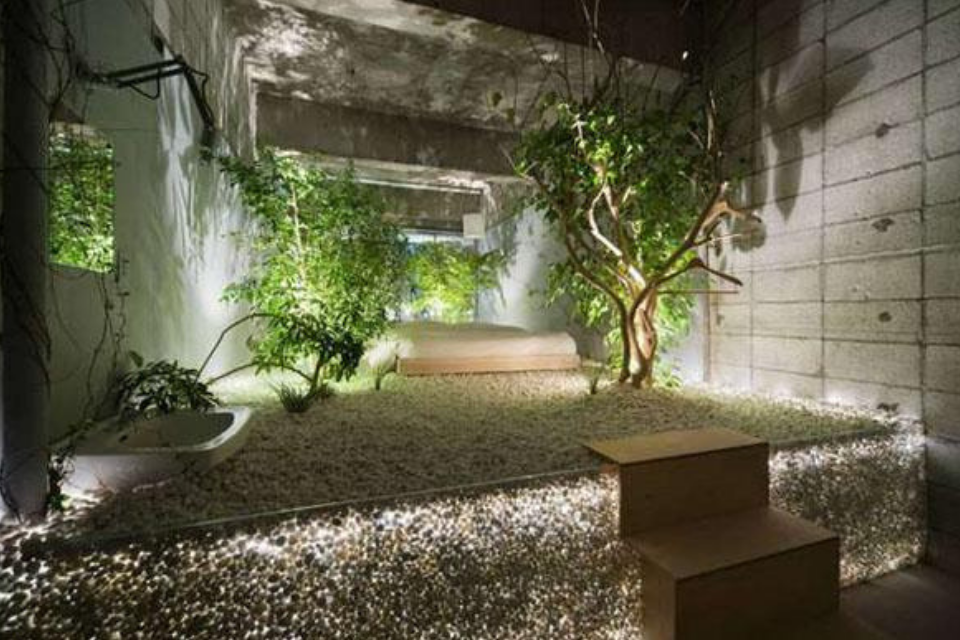
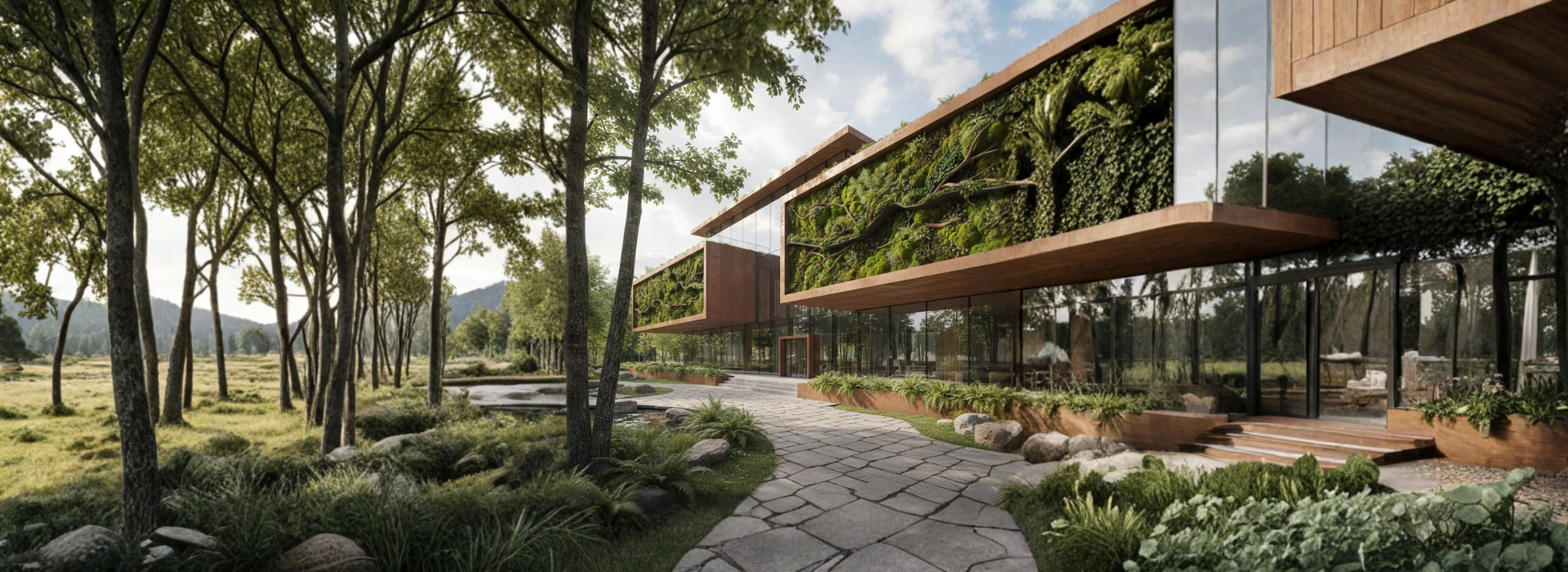
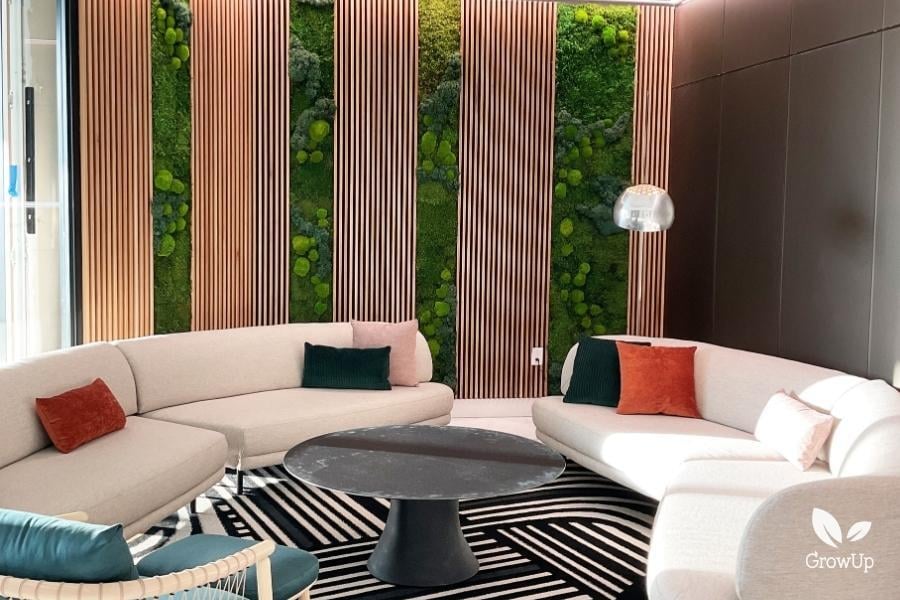
- Living plants and green walls
- Natural daylight and airflow
- Water features
- Views of outdoor landscapes
These elements provide the strongest sensory connection to nature and often have the most immediate impact on occupants.
2. Indirect Experiences of Nature
Indirect experiences reference nature without requiring living systems. These include:
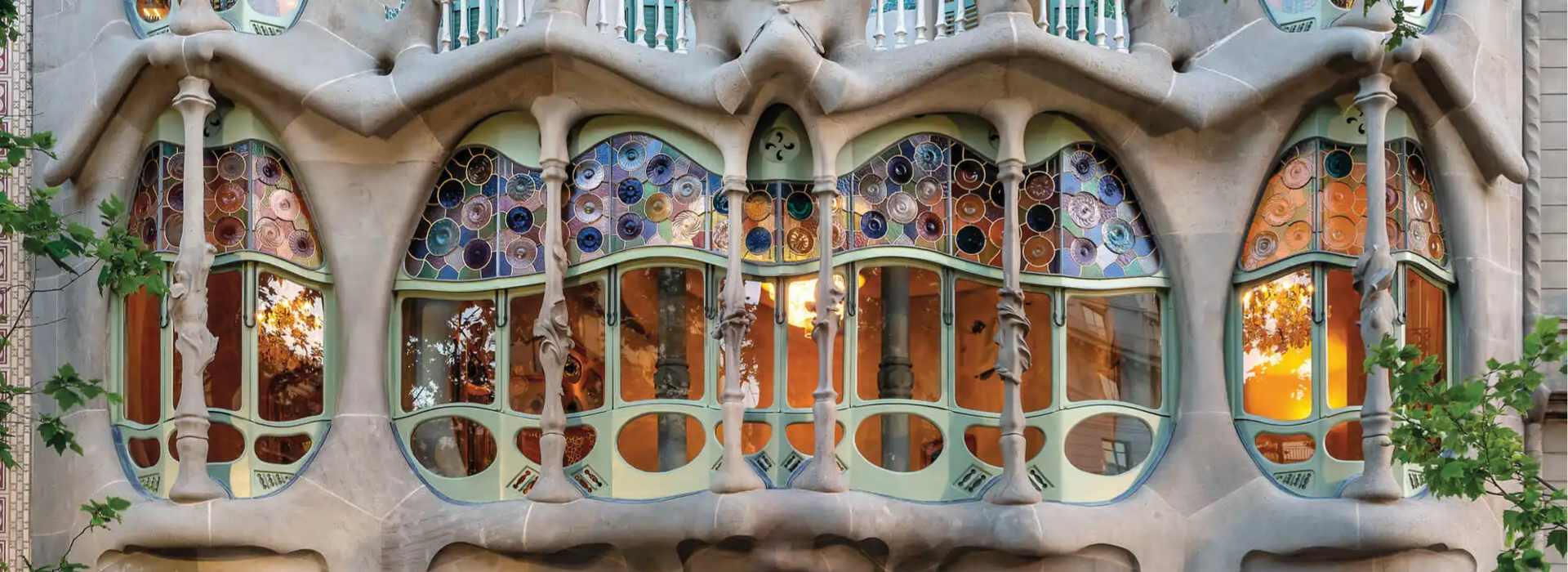
- Natural materials like wood, stone, cork, and clay
- Organic forms and biomorphic patterns
- Color palettes inspired by nature
- Nature-inspired artwork or imagery
Indirect strategies are especially valuable in environments where live systems may be impractical but biophilic benefits are still desired.
3. Spatial & Experiential Qualities
Beyond materials and elements, biophilic design also considers how spaces are shaped and experienced. Examples include:
- Prospect and refuge (open views paired with moments of enclosure)
- Visual complexity and variation
- Transitions between spaces
- Sensory richness without overstimulation
These principles help spaces feel more intuitive, comfortable, and engaging.
Where Greenery Fits Into Biophilic Design
Plants are one of the most recognizable components of biophilic design, but they are most effective when used intentionally, not decoratively.
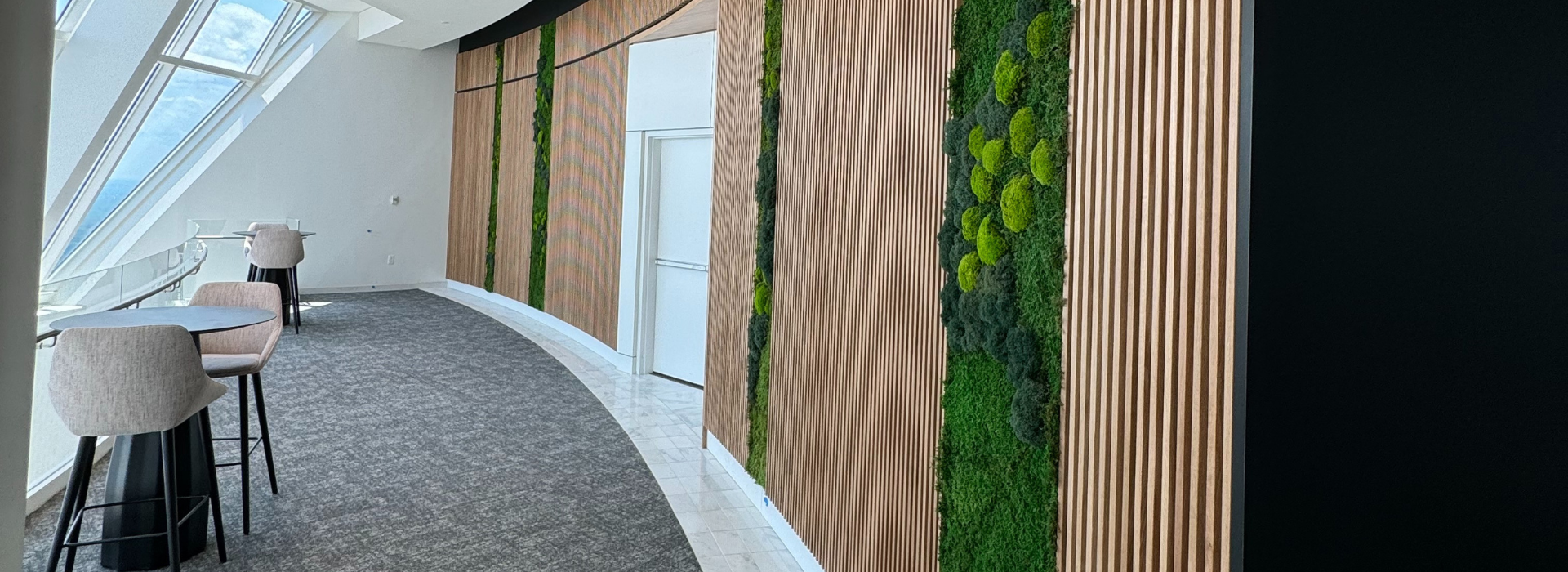
Living plant walls, preserved moss systems, and other greenery solutions offer:
- A strong direct connection to nature
- Visual softness in highly constructed environments
- Opportunities to influence acoustics, atmosphere, and experience
However, greenery should always be selected based on:
- Light availability
- Maintenance expectations
- Project type and usage
- Desired sensory impact
When greenery is treated as part of a broader biophilic strategy, rather than an afterthought, it becomes a powerful design tool rather than a visual add-on.
Biophilic Design Is a Process, Not a Finish
One of the most common misconceptions about biophilic design is that it happens at the end of a project. In reality, the most successful biophilic environments are those where natural principles are considered early in the design process.
Early integration allows designers to:
- Coordinate systems more effectively
- Align aesthetics with performance
- Create cohesive, long-lasting solutions
- Avoid costly retrofits or compromises
Biophilia works best when it informs decisions about layout, materials, systems, and experience, not just surface-level features. Designing in this way supports human-centered design, using the needs, experiences and behaviors of the occupants to guide design decisions.
Designing for People, Not Just Spaces
As the industry continues to evolve, biophilic design is increasingly seen not as a trend, but as a fundamental approach to creating healthier, more responsive environments.
By understanding the principles behind biophilic design and applying them with intention, architects and designers can create spaces that do more than function or impress. They can create spaces that genuinely support the people who use them.
This foundational understanding sets the stage for deeper conversations about integration, performance, and long-term value, which we’ll continue to explore throughout the year.