Long before "biophilic design" became a recognized architectural framework, history’s most forward-thinking designers were already looking to nature to heal the human relationship with urban spaces.
In our ongoing Art in Architecture series, we’ve explored how ancient civilizations mirrored the natural world. Today, we turn our attention to the late nineteenth century, a period of intense industrialization and the birthplace of a movement that completely dissolved the line between art, architecture, and the living world: Art Nouveau.
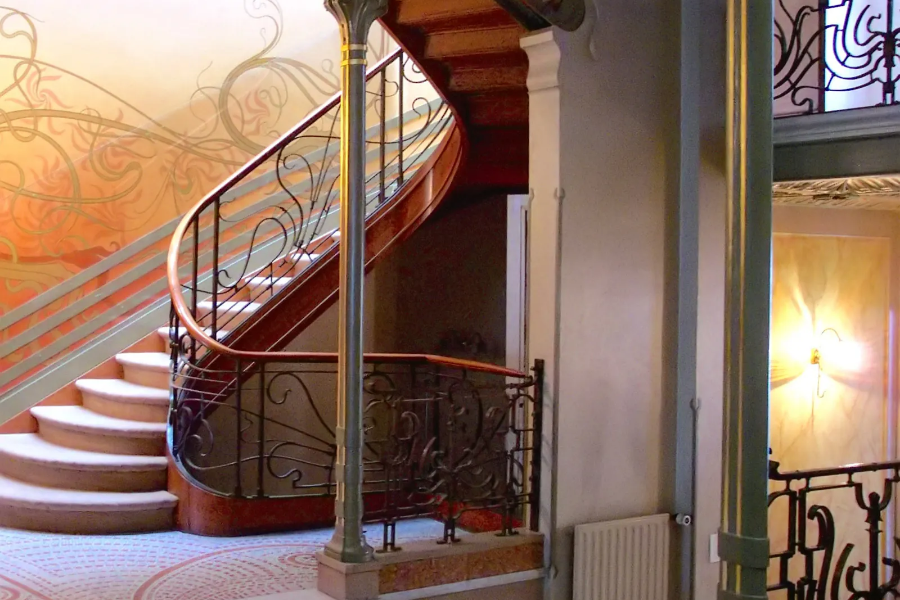
Victor Horta’s Hôtel Tassel (Brussels) demonstrates architecture that mimics the organic growth patterns of nature. Source: Britannica
A Rebellion Against the Machine
The Art Nouveau movement emerged out of a collective gasp for air. By the late 1800s, Europe’s major cities were being reshaped by rapid industrialization. Factories, mass-produced iron grids, and rigid geometric urban planning were dominating daily life, leaving people feeling disconnected from the natural world.
In response, a revolutionary group of architects and artists rejected the sterile, machine-made aesthetic. They proposed a radical new philosophy: architecture shouldn’t just provide shelter; it should be a living work of art.
Instead of looking back at static classical rules, they looked out the window. Nature became their structural blueprint and their entire design language.
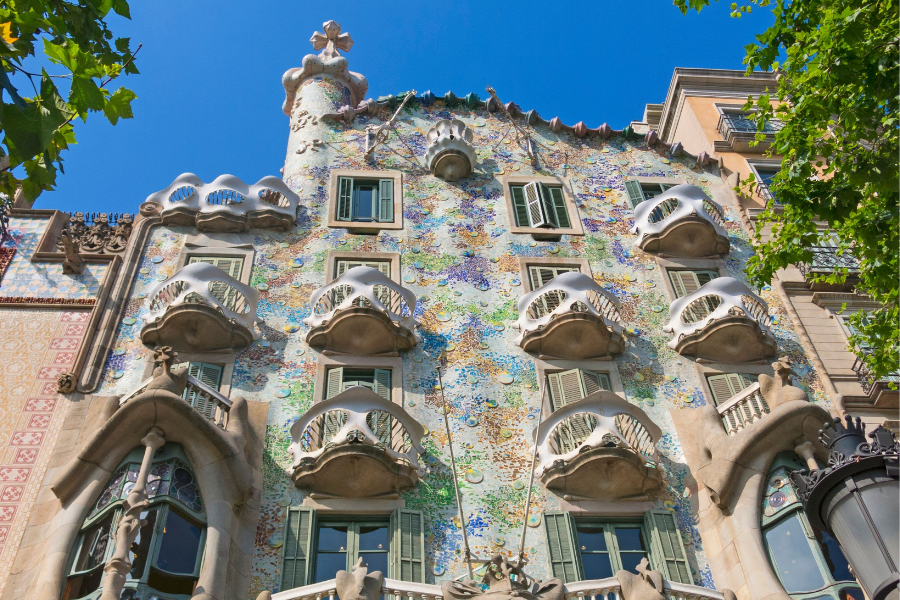
Antoni Gaudí’s Casa Batlló in Barcelona completely broke away from rigid industrial geometry, mimicking organic skeletal shapes and ocean waves. Source: ToniFlap / Getty Images
Growing Architecture: The Concept of Natural Analogues
One of the core pillars of modern biophilic design is the use of natural analogues, which are non-living representations of nature like organic shapes, patterns, and textures that trigger the same positive psychological benefits as being out in the wild.
Art Nouveau architects understood this instinctively. They did not just decorate buildings with pictures of leaves; they made the buildings look as if they were actively growing.
- The Whiplash Curve: Designers utilized flowing, asymmetrical lines that mimicked the untamed growth of vines, roots, and waves.
- Structural Biomimicry: Cast-iron pillars were not left as cold metal beams. They branched out at the ceiling like majestic forest canopies. Stairwells spiraled smoothly like the interior of a seashell, and window frames opened up like delicate flower petals reaching for daylight.
When you walked into an Art Nouveau space, the sharp angles of the built environment disappeared, replaced by the comforting, soft curves of the natural world.
Harvesting Light and Sensory Richness
Beyond structural forms, the movement prioritized how humans experienced a space through light, color, and texture, which are elements we now know are crucial for maintaining healthy circadian rhythms and reducing mental fatigue.
Maximizing Dynamic Light
Art Nouveau interiors pioneered the use of massive glass domes, sweeping skylights, and intricate stained glass panels. By allowing raw daylight to flood deep into buildings, they created spaces that changed dynamically throughout the day. The filtered sunlight passing through botanical glass cast shifting, organic shadows across rooms, mirroring the dappled light of a forest floor.
A Living Palette
The colors of the movement were directly pulled from the landscape. Architects traded industrial grays for muted sages, deep moss greens, warm earth browns, and vibrant ochres. This sensory richness created an emotional grounding point for occupants, making the indoor environment feel directly connected to the rhythms of the outdoors.
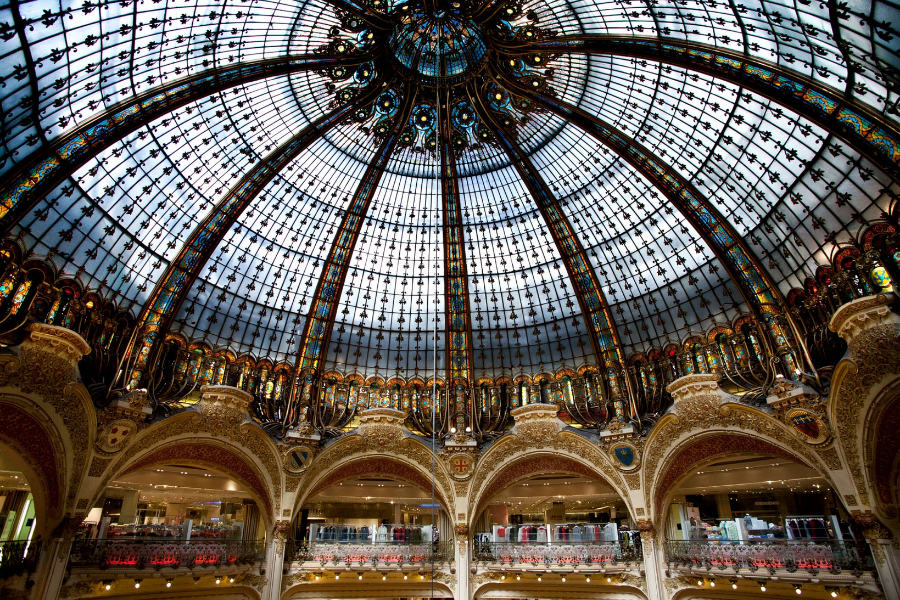
Stained glass domes flooding grand interiors with natural, shifting daylight, a direct precursor to modern daylighting principles. Source: Busà Photography / Getty Images
Bridging the Gap: Art Nouveau vs. Modern Biophilia
While Art Nouveau artists used craftsmanship to replicate the feeling of nature, today’s architects have the data to prove why those choices worked. Decades of environmental psychology show that viewing organic shapes lowers heart rates and reduces stress.
The primary evolution between then and now is that today we do not just have to rely on artistic interpretations of nature because we can bring nature itself inside.
| Element | Art Nouveau Approach (1890s) | Modern Biophilic Approach (Today) |
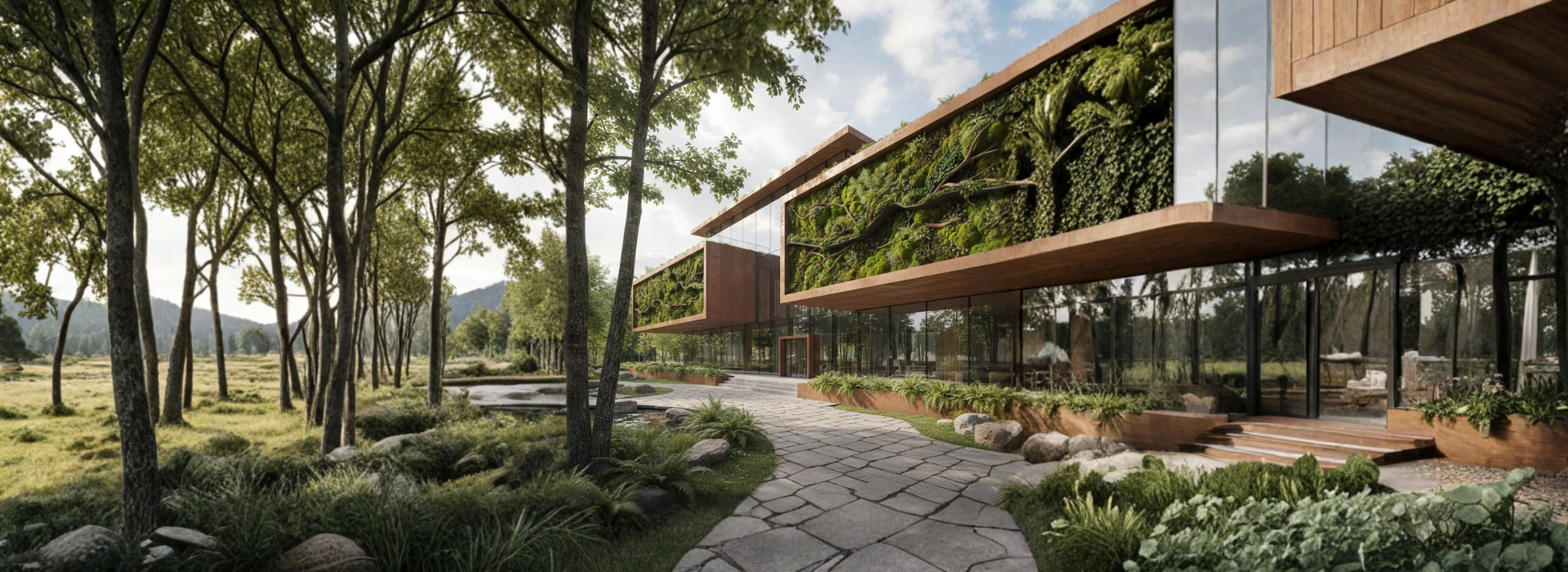
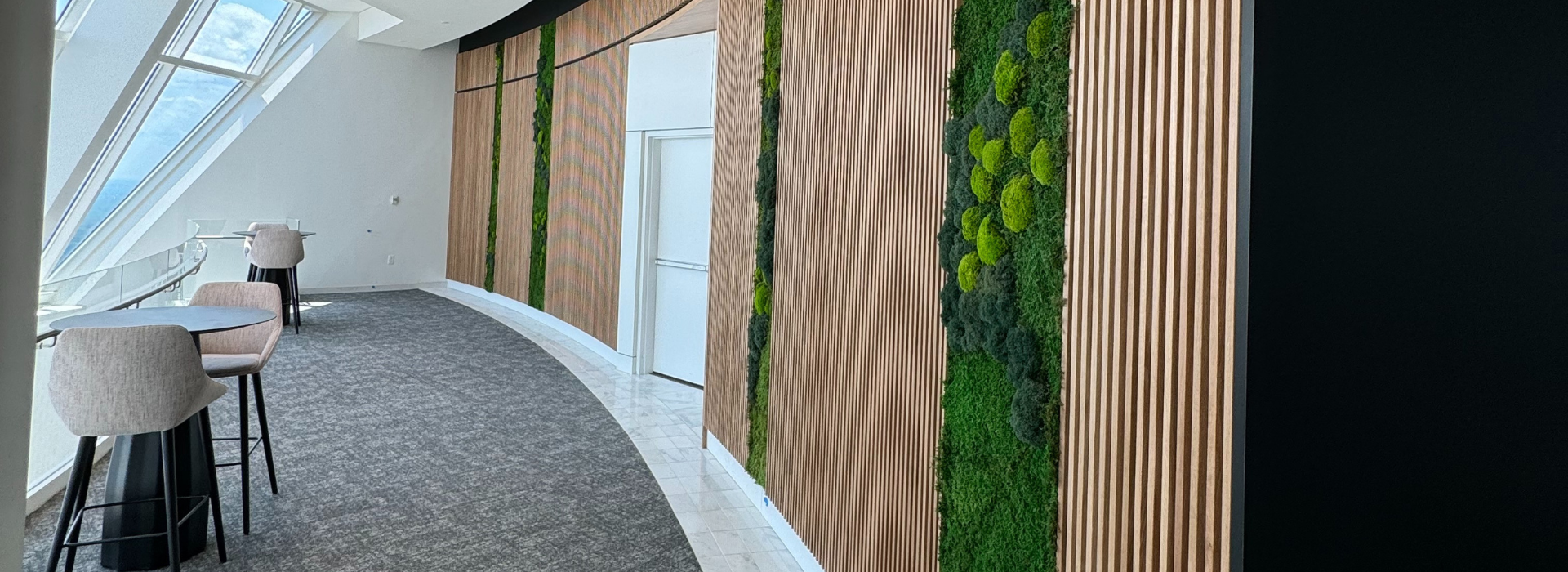
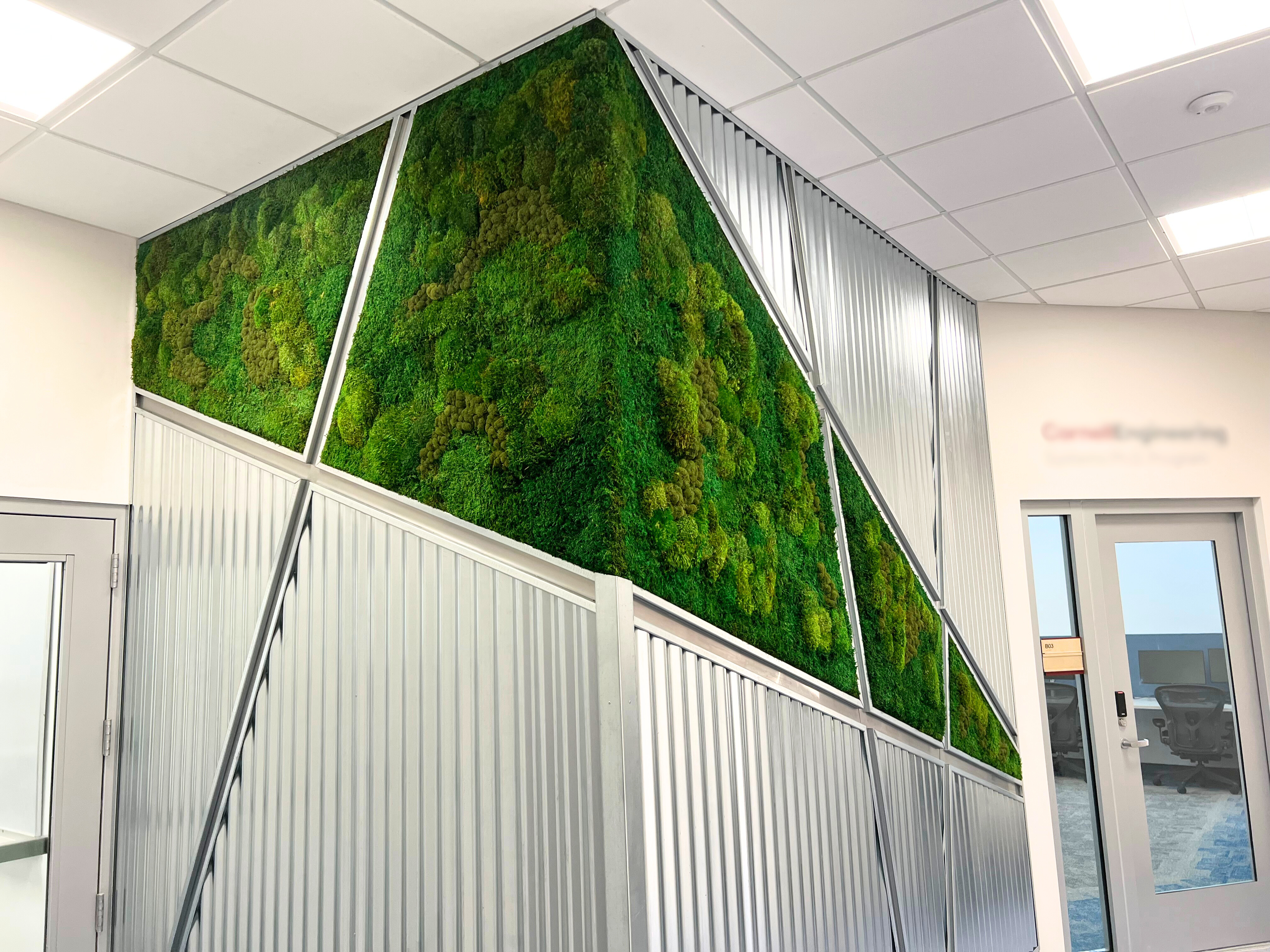
| Plants & Vegetation | Hand-carved stone ivy and wrought-iron vines | Automated living green walls and preserved moss installations |
| Organic Forms | Handcrafted whiplash curves and structural branching columns | CNC-milled timber curves and organic, curvilinear floorplans |
| Materiality | Sculpted stone, wrought iron, and stained glass | Raw, sustainably sourced timber, living stone, and daylighting |
Bringing the Spirit of Art Nouveau Into Today's Spaces
For modern designers looking to capture the enchanting, wellness-focused spirit of Art Nouveau, you do not need to completely rebuild with hand-forged ironwork. Instead, you can use modern green infrastructure to achieve the exact same goal: breaking up the rigid lines of modern urban spaces.
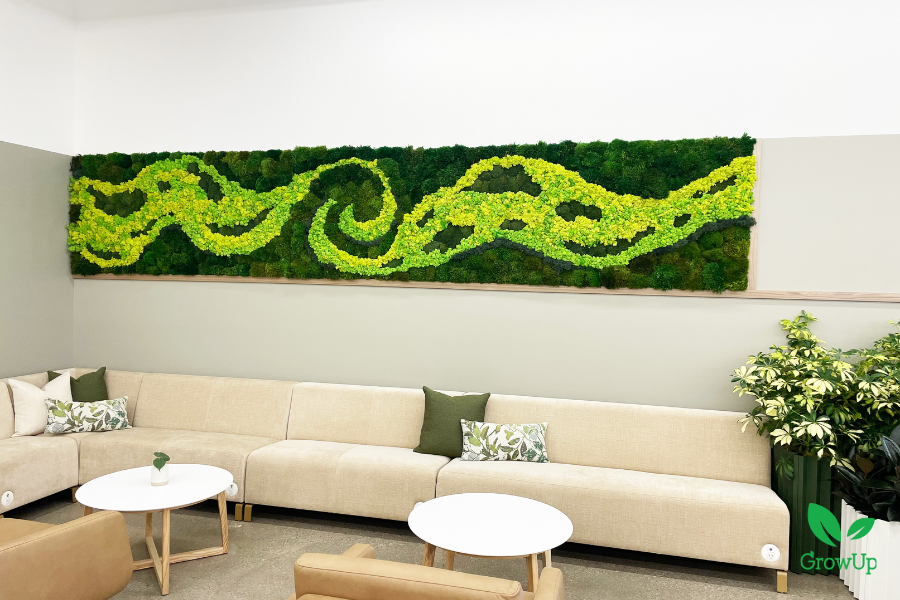
- Introduce Fluid Textures: Incorporating custom preserved moss walls allows you to design flowing, undulating green patterns across a wall that mimic the iconic curves of the nineteenth-century masters, all with absolutely zero maintenance.
- Integrate Vertical Ecosystems: Installing a living green wall introduces actual, air-purifying biodiversity directly into your architecture. The living leaves rustle, grow, and change over time, offering true sensory richness.
- Embrace Soft Geometry: Look for opportunities to introduce curved furniture, rounded entryways, and natural textiles that contrast against the boxy constraints of modern corporate or residential design.
The Best Design Begins with Nature
Art Nouveau reminds us that our desire to remain connected to the earth is not a temporary design trend; it is a foundational human need. Long before there were scientific studies measuring how nature improves productivity and mental health, visionary architects knew that building with the language of the earth had the power to transform the human experience.
As we continue to build the cities of tomorrow, the core lesson of Art Nouveau remains beautifully intact: when we design for human well-being, the best inspiration always starts from the ground up.
References & Further Reading
- Browning, W.D., Ryan, C.O., & Clancy, J.O. (2014). 14 Patterns of Biophilic Design. New York: Terrapin Bright Green LLC. (Detailing the psychological benefits of natural analogues, material connection, and dynamic light).
- Fahr-Becker, G. (2015). Art Nouveau. Cologne: Taschen. (An in-depth exploration of the movement’s rebellion against industrialization and its return to organic craftsmanship).
- Gaudí, A., & Crippa, M. A. (2003). Antoni Gaudí, 1852–1926: From Nature to Architecture. Cologne: Taschen. (Examining Gaudí's specific structural biomimicry and use of organic forms in Barcelona).
- Howard, J. (1996). Art Nouveau: International and National Styles in Perspective. Manchester University Press. (A historical analysis of how the movement spread across Europe as a unified design language).
- Kellert, S. R., Heerwagen, J., & Mador, M. (2008). Biophilic Design: The Theory, Science, and Practice of Bringing Buildings to Life. John Wiley & Sons. (Providing the scientific framework that validates the intuitive environmental choices made by nineteenth-century architects).
- UNESCO World Heritage Centre. Works of Antoni Gaudí & Major Town Houses of the Architect Victor Horta (Brussels). Retrieved from UNESCO World Heritage cultural archives. (Historical data on Casa Batlló and Hôtel Tassel).
-2.jpg)