For many businesses, the return to office (RTO) movement is no longer a discussion, it is becoming standard practice. Across industries, companies are increasing mandatory in-office days. Many are shifting from fully remote work to hybrid schedules, and some are even requiring employees to return five days a week.
While the reasons for these mandates vary, one thing is becoming increasingly clear: if businesses expect employees to spend more time in the office, they must provide an environment people actually want to work in.
The modern office can no longer simply be a place to sit at a desk. It needs to support wellbeing, collaboration, creativity, and productivity. As organizations compete for talent in an evolving workplace, office design has become a strategic investment rather than an aesthetic afterthought.
The Return-to-Office Trend
Recent workplace research shows a clear shift back towards physical offices. Major global employers like Amazon, Dell, and Goldman Sachs have tightened attendance requirements, making it clear that physical presence is tied to performance and career growth. Hybrid work remains common, but the flexibility scale is tipping back toward corporate headquarters.
However, attendance policies alone do not guarantee engagement. Research consistently shows that employees value flexibility, autonomy, and meaningful workplace experiences. In fact, organizations that focus solely on enforcing compliance often experience lower morale and quiet quitting.
The most successful companies are no longer asking how to get people back. Instead, they are asking how to make coming in worthwhile. Purposeful office attendance, where employees come together for collaboration, mentoring, innovation, and social connection, is proving far more effective than simply filling desks.
The Office Experience Matters More Than Ever
For many employees, commuting now represents both a financial and time investment. If the office offers little beyond what can be achieved from home, motivation naturally declines. Today's workplace needs to deliver benefits that remote work cannot easily replicate, including:
- Better opportunities for collaboration
- Informal knowledge sharing
- Stronger team culture
- Creative brainstorming
- Professional development
- Spaces that support health and wellbeing
This shift has placed employee experience at the center of workplace design. Rather than treating the office as a cost center, forward-thinking organizations are viewing it as a tool for attracting talent, improving retention, and strengthening company culture.
Biophilic Design Creates Offices People Want to Use
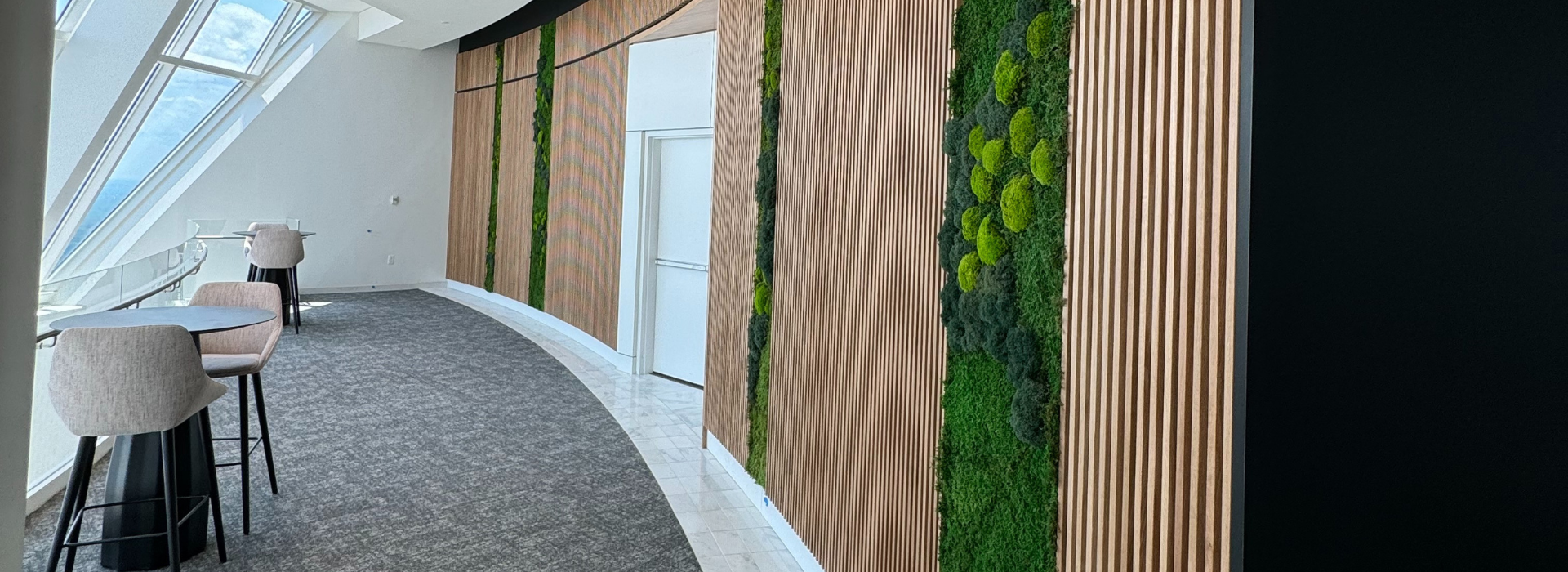
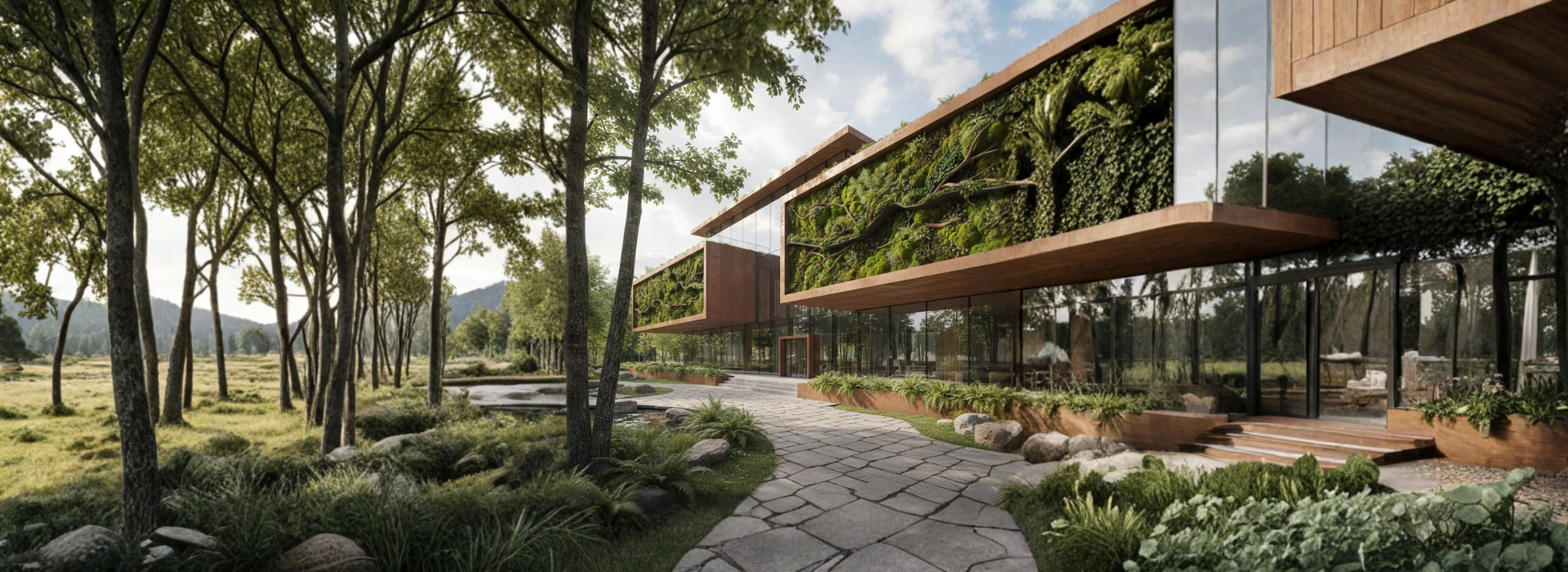
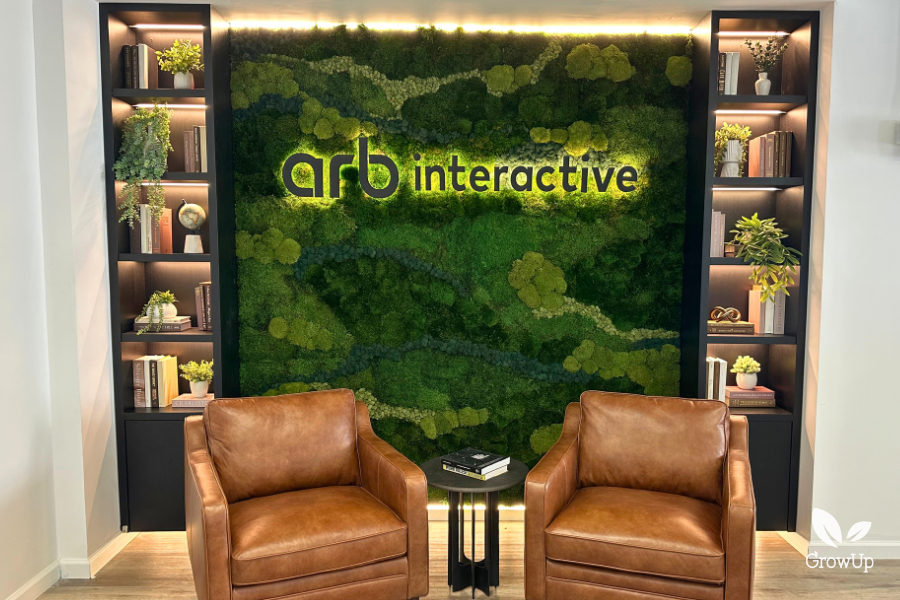
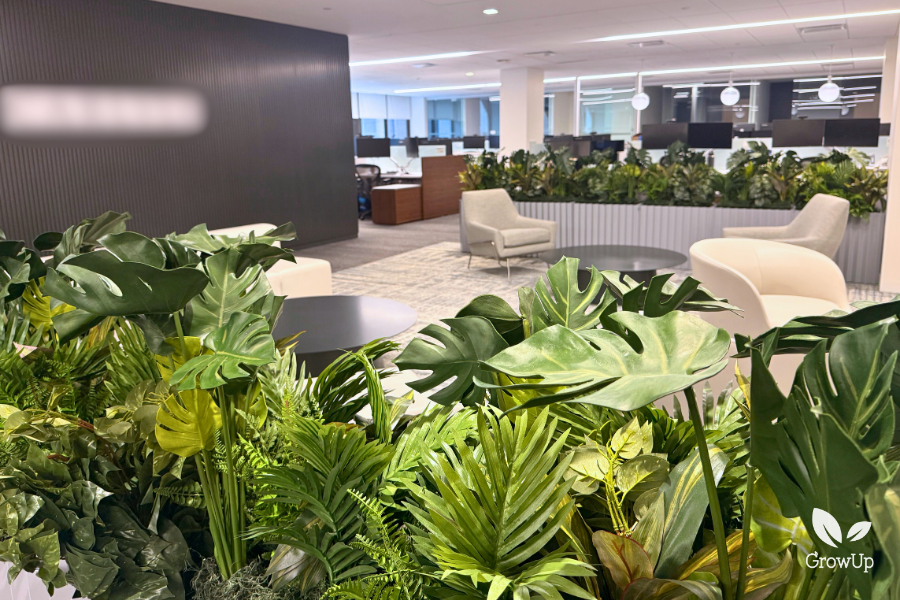
One of the biggest design trends emerging alongside return-to-office strategies is biophilic design. Biophilic design incorporates natural elements into built environments, helping reconnect people with nature throughout the working day. This can include preserved moss walls, living walls, natural wood, daylight, organic forms, indoor planting, and views of greenery.
The benefits are supported by years of data. The Human Spaces Report, which surveyed over 7,600 office workers across 16 countries, found that employees working in environments incorporating natural elements reported substantial benefits:
| Metric | Improvement |
| Employee Wellbeing | 15% increase |
| Overall Creativity | 15% increase |
| Daily Productivity | 6% increase |
While a 6% productivity increase may sound modest, across a business with hundreds of employees it represents a significant operational advantage. Natural environments have also been linked with lower perceived stress, improved mood, and greater workplace satisfaction, which are all increasingly valuable as employees spend more time back in the office.
Beyond Plants: Designing for Employee Wellbeing
Modern biophilic workplaces extend well beyond placing a few potted plants around the room. Successful environments integrate nature throughout the entire employee experience through features such as:
- Preserved moss walls and living green walls
- Natural textures and sustainable materials
- Abundant, unfiltered natural light
- Organic architectural forms and curved lines
- Acoustic planting that reduces background noise
- Breakout areas inspired by natural landscapes
These features help soften corporate environments while creating spaces that feel calmer, healthier, and more inviting. For businesses encouraging employees back into shared workspaces, these design choices communicate something important: employee wellbeing matters.
Why Moss Walls Are Particularly Effective
Among biophilic design features, preserved moss walls offer several unique advantages for modern offices. Unlike living plants, preserved moss requires no watering, pruning, sunlight, or ongoing plumbing infrastructure. This makes it particularly suitable for commercial interiors where reliability and zero maintenance are priorities.
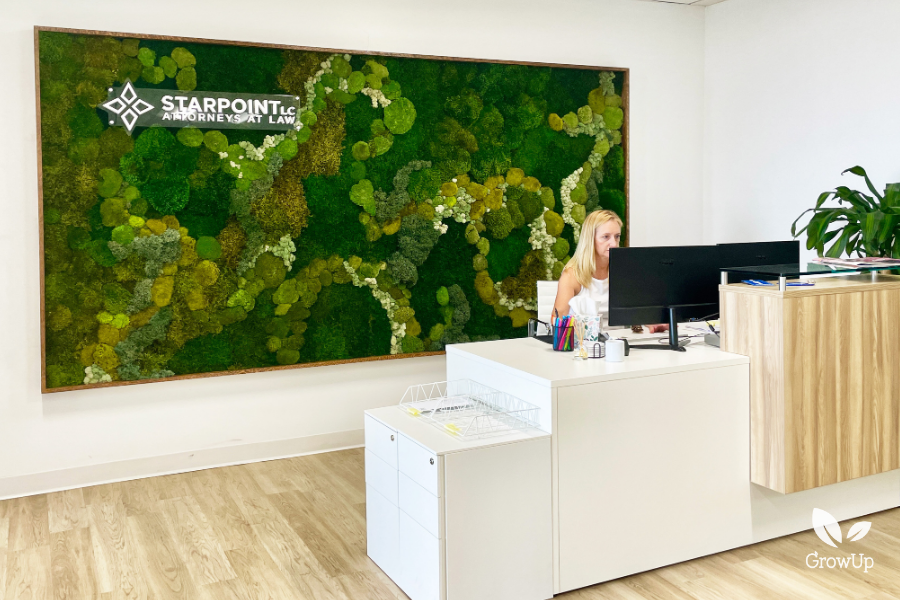
At the same time, moss installations provide many of the visual and psychological benefits associated with nature while also improving interior acoustics by helping absorb ambient noise. This is an important consideration in open-plan offices. For collaborative environments, reducing background noise can improve concentration while making meetings and conversations more comfortable. The result is a workplace that feels quieter, more welcoming, and visually distinctive.
The Office Has to Earn the Commute
One of the most interesting shifts in workplace thinking is that offices now need to justify employees' time. Workers have experienced several years of flexible working, and expectations have changed permanently. Simply requiring attendance is no longer enough to build engagement.
Instead, organizations are investing in workplaces that provide experiences unavailable at home:
- High-performance collaboration spaces
- Hospitality-inspired amenities
- Wellness-focused environments
- Flexible, activity-based work settings
- Stronger structural connections to nature
The office is becoming less about where work happens and more about how people experience work together.
Investing in Experience Is Investing in Your People
As return-to-office policies continue to evolve, companies face a choice. They can focus purely on attendance compliance, or they can focus on creating workplaces employees genuinely enjoy.
Businesses that prioritize employee wellbeing through thoughtful office design are likely to see benefits that extend far beyond aesthetics. These benefits include stronger engagement, improved collaboration, higher job satisfaction, and greater employee retention. Biophilic design, and particularly preserved moss walls, offers an accessible, high-impact way to transform offices into environments that support both people and performance.
The future workplace isn't simply about bringing employees back. It's about giving them a reason to stay.
Sources
- Gable: Biophilic Office Design (https://www.gable.to/blog/post/biophilic-office-design)
- Gable: Return to Office: What Workplace Leaders Need to Know (https://www.gable.to/blog/post/return-to-office)
- Gable: 6 Office Design Trends Reshaping the Workplace (https://www.gable.to/blog/post/office-design-trends)
- Founder Reports: Return-to-Office Statistics (https://founderreports.com/return-to-office-statistics/)
- Forbes: Return-To-Office Mandates Aren't Fixing What's Actually Broken (https://www.forbes.com/sites/vibhasratanjee/2026/02/10/return-to-office-mandates-arent-fixing-whats-actually-broken/)
- Raconteur: Which Companies Are Enforcing Office Returns (https://www.raconteur.net/talent-culture/which-companies-are-enforcing-office-returns)
- Yahoo Finance: RTO Compliance: Workers Back Down (https://finance.yahoo.com/news/rto-compliance-workers-back-down-110400595.html)
- Human Spaces Report: The Global Impact of Biophilic Design in the Workplace by Interface & Sir Cary Cooper
-1.jpg)